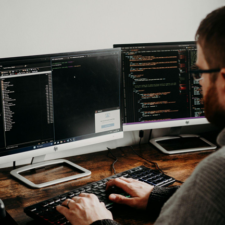
Programming is demanding in ways that are easy to underestimate. You can spend an entire day solving problems, reviewing code, fixing bugs, attending meetings, and switching between projects without moving much beyond your desk. For developers living and working in Vancouver, adding MMA in Vancouver to a weekly routine can provide a completely different kind of challenge. It gets you away from the screen, gives your body a reason to move, and puts your brain to work in a way that feels very different from debugging software.
Vancouver has a large community of programmers, developers, freelancers, remote workers, startup employees, and people working in technology. Many of us spend long hours behind laptops, whether from a downtown office, a coworking space in Mount Pleasant, or a home office somewhere in Kitsilano, Burnaby, or East Vancouver.
That kind of work can be rewarding, but it is also easy to fall into a routine where most of the day happens in front of a screen.
Mixed martial arts offers an interesting alternative.
MMA combines elements of striking, grappling, footwork, conditioning, timing, positioning, and problem-solving. You do not need to be interested in becoming a professional fighter to benefit from learning it. For many people, it is simply an engaging way to exercise, learn new skills, meet people, and create a clear break between work and personal time.
For programmers in particular, MMA can feel surprisingly familiar. Both programming and martial arts reward patience, repetition, attention to detail, and the ability to learn from mistakes.
Why Programmers Need Something Away From the Screen
A developer can be extremely busy without being physically active.
You might start the morning answering Slack messages, spend several hours writing code, join a video meeting, eat lunch at your desk, return to debugging, and suddenly realize the entire workday has passed.
Remote work can make this even more noticeable.
When your office is ten steps from your kitchen, there is no commute. There may be no walk to a bus stop, no SkyTrain ride, and no reason to leave your home until the evening.
Then, after spending eight hours on a computer, it is easy to spend another few hours:
- Watching Netflix
- Gaming
- Working on a personal coding project
- Browsing Reddit
- Watching YouTube
- Learning another programming framework
- Scrolling through social media
There is nothing inherently wrong with these activities, but your entire day can quickly become screen-based.
MMA gives you a reason to physically leave that environment.
Instead of going from one screen to another, you spend an hour learning how to move, strike, defend, grapple, or improve your conditioning.
That change can feel refreshing after a mentally demanding day.
Programming Is Mentally Exhausting Even When You Barely Move
One strange thing about programming is how tired you can feel after sitting down all day.
Writing software requires constant decision-making.
You may be thinking about:
- Architecture
- Performance
- Security
- User experience
- Bugs
- Deadlines
- Database structure
- API behaviour
- Code reviews
- Testing
- Client requests
- Deployment problems
Sometimes one small bug consumes an entire afternoon.
You know the situation.
Everything looks correct. The code should work. The error message is not particularly useful. You change something, test it, change it back, search documentation, read an old Stack Overflow discussion, and eventually discover the problem was something completely unexpected.
By the end of the day, your body has barely moved, but your brain feels finished.
This is where physical activities can be particularly valuable.
MMA forces you to focus on something completely unrelated to software.
When someone is showing you how to defend a takedown or move correctly during a striking drill, you are probably not thinking about tomorrow’s sprint planning meeting.
For that hour, the code can wait.
1. MMA Gets Programmers Out of Their Chairs
The most obvious advantage is also one of the most important.
MMA involves movement.
Depending on the class, training may include:
- Footwork
- Punching combinations
- Kicks
- Defensive movement
- Grappling
- Wrestling drills
- Brazilian Jiu-Jitsu techniques
- Pad work
- Bodyweight exercises
- Conditioning
- Mobility exercises
Compare that to the normal working position of a programmer.
Chair. Keyboard. Mouse. Monitor.
Repeat for eight hours.
Even developers who regularly go to the gym may find MMA appealing because the movement is constantly changing.
Instead of doing three sets on a machine and moving to the next exercise, you are learning how different movements connect.
You might be practicing footwork for a few minutes, then learning a combination, then working with a partner, followed by conditioning.
There is usually something technical to think about while you are moving.
That can make exercise more interesting for people who find traditional workouts repetitive.
After spending your afternoon trying to understand why an application keeps throwing an exception, learning a jab-cross combination or practicing a grappling position is a very different way to use both your body and your attention.
2. MMA Gives Your Brain Another Type of Problem to Solve
MMA is not purely physical.
There is a large technical component.
You have to understand things such as distance, balance, timing, position, defence, movement, and reactions.
A technique may look simple when your coach demonstrates it.
Then you try it.
Your feet are in the wrong position.
Your weight is moving in the wrong direction.
Your hands are too low.
Your timing is late.
Suddenly something that looked easy becomes a complicated sequence of small details.
That experience should feel familiar to programmers.
A software feature can also look simple when someone describes it.
“Just add a button.”
Then you discover the button requires a new API endpoint, database changes, authentication logic, responsive styling, analytics tracking, testing, and six edge cases nobody originally mentioned.
MMA has similar layers.
The deeper you learn, the more details you notice.
Programming and MMA Have More in Common Than You Might Think
| Programming | MMA Training |
| Learn programming syntax | Learn fundamental techniques |
| Debug broken code | Correct mistakes in technique |
| Run tests | Practice drills |
| Handle unexpected edge cases | React to unexpected movement |
| Refactor code | Refine technique |
| Build complex systems from simple functions | Build combinations from basic movements |
| Review code | Receive coaching feedback |
| Repeat until something works | Drill until movement feels natural |
The comparison is not perfect, but the learning process has similarities.
Both require patience.
Both reward consistency.
And both frequently remind you that understanding something theoretically is very different from being able to execute it properly.
3. MMA Creates a Clear End to the Workday
For people working from home, separating work from personal life can be difficult.
Your workday may officially finish at 5:00 p.m., but your laptop is still sitting there.
You remember one thing you forgot to fix.
You quickly open the project.
Five minutes becomes forty-five minutes.
Suddenly you are working again.
Having a scheduled MMA class can create a physical boundary.
Your day becomes:
- Finish work.
- Close the laptop.
- Pack your training gear.
- Leave home.
- Go to class.
- Train.
- Come home.
That simple routine can make a big difference psychologically.
Vancouver also makes this type of schedule fairly practical depending on where you live and train.
If you work downtown, you may be able to find a gym somewhere along your commute. If you live near a SkyTrain route, getting to evening classes can be easier than driving through traffic during rush hour.
During Vancouver’s rainy fall and winter months, having a scheduled indoor activity can also be useful.
It is easy to plan a run around the Seawall in July.
A dark Tuesday evening in November when the rain is coming sideways is a different story.
An indoor class gives you somewhere specific to go regardless of the weather.
4. MMA Teaches You to Work Through Mistakes
Software developers spend a lot of time being wrong.
That might sound negative, but it is simply part of building things.
You write code.
It fails.
You investigate.
You change something.
It fails differently.
You investigate again.
Eventually you understand the problem.
MMA works in a similar way.
You will perform techniques incorrectly.
A coach will adjust your position.
You try again.
Your training partner notices something.
You make another adjustment.
Eventually the movement starts feeling more natural.
This creates a useful cycle:
- Attempt
- Make a mistake
- Identify what went wrong
- Adjust
- Try again
Programmers already understand this process.
A failed build does not mean you are incapable of programming. It means something needs to be corrected.
A technique that does not work during training is similar.
Maybe your timing was wrong.
Maybe your balance was poor.
Maybe you skipped an important step.
The answer is usually to slow down, understand the mistake, and repeat the process.
5. MMA Gives You Progress That Has Nothing to Do With Your Career
Technology moves quickly.
There is always another framework to learn, another certification to complete, another language to explore, and another tool everyone on LinkedIn suddenly seems to be using.
For ambitious developers, personal development can easily become career development.
Even hobbies sometimes become work.
You start building a small app for fun.
Three weeks later you are researching hosting costs, SEO, monetization, and whether you should turn it into a SaaS business.
MMA provides a different type of progress.
Your goals might include:
- Improving footwork
- Learning a new combination
- Becoming more comfortable during drills
- Improving conditioning
- Remembering a grappling sequence
- Attending classes consistently
- Developing better timing
- Becoming more confident with basic techniques
None of these goals need to improve your resume.
And that can be valuable.
Not every form of self-improvement needs to produce revenue, career opportunities, or another portfolio project.
Sometimes learning something simply because it is interesting is enough.
6. MMA Can Add More Face-to-Face Interaction to Your Week
A lot of programming communication happens through screens.
Even when working with a large team, your typical interactions may happen through:
- Slack
- Microsoft Teams
- Zoom
- Google Meet
- GitHub
- Jira
Remote developers can spend an entire workday talking to people without physically being in the same room as anyone.
MMA changes that.
Training normally involves interaction with coaches and other students.
You might work with someone during technique drills, rotate partners, ask questions, or help each other understand a movement.
This can create casual social interaction without requiring formal networking.
You are not standing in a conference room trying to introduce yourself to strangers while holding a name tag and pretending to enjoy networking.
You are simply participating in the same class.
Over time, familiar faces become training partners.
For programmers who work remotely or independently, this can add a useful offline social component to the week.
7. You Do Not Have to Become an MMA Fighter
One of the biggest misconceptions about mixed martial arts is that joining an MMA gym means you eventually need to step into a cage.
You do not.
Many people train martial arts recreationally.
Some are interested in fitness.
Some like learning practical skills.
Some enjoy the technical challenge.
Some eventually decide to compete.
Others never do.
If you are a programmer who has never thrown a punch or practiced grappling, you do not need to arrive at your first class looking like a professional athlete.
Beginner training generally starts with fundamentals.
You may learn:
- Basic stance
- How to move your feet
- Basic punches
- Basic defensive movements
- Simple grappling positions
- How to move safely with a partner
- Basic combinations
Nobody expects a new programmer to understand an unfamiliar codebase on the first day.
The same principle applies here.
You are there to learn.
8. MMA Can Be More Interesting Than a Traditional Gym Routine
Some people love traditional gyms.
They enjoy tracking weights, sets, repetitions, and personal records.
Others lose interest quickly.
A typical workout might look like:
- Treadmill
- Bench press
- Rows
- Squats
- A few machines
- Go home
There is nothing wrong with that approach.
But if your brain naturally enjoys learning systems, MMA may keep your attention differently.
There is always another detail to improve.
You might spend one week learning basic striking combinations and the next focusing more on defensive movement.
Another class might include grappling techniques.
Even a technique you have practiced many times can reveal new details as your understanding improves.
For programmers, the learning curve can be part of the appeal.
You are not exercising only for the sake of exercise.
You are developing a skill.
9. MMA Forces You to Be Present
Programmers are used to multitasking.
You may have:
- An IDE open
- Documentation in another window
- Slack notifications appearing
- Music playing
- A browser with twenty tabs
- An AI coding assistant running
- Email notifications arriving
- A ticket system open on another monitor
Your attention is constantly being divided.
MMA requires a different kind of focus.
If a coach is explaining a movement, you need to pay attention.
If you are drilling with a partner, you need to watch what is happening.
If you are moving around the mat, you need to know where you are.
This creates an environment where checking your phone every three minutes is not practical.
For an hour, there may be no notifications, GitHub issues, pull requests, or unread messages demanding your attention.
That alone can make training feel like a mental reset.
10. Vancouver Is a Good City for Building an Active Routine
Living in Vancouver already gives us plenty of options for staying active.
Depending on where you live, your weekend might include walking around Stanley Park, cycling along the Seawall, hiking the North Shore, skiing during winter, or spending an afternoon at Kits Beach.
MMA can complement those activities.
The difference is consistency.
Outdoor activities in Vancouver can depend heavily on:
- Weather
- Daylight
- Season
- Travel time
- Weekend plans
A martial arts class is scheduled.
If your class starts at 6:30 p.m. on Tuesday, you know exactly when you need to show up.
That structure can make it easier to maintain a regular routine.
For programmers with unpredictable workloads, consistency can be more useful than having ambitious fitness goals that rarely happen.
Two regular classes every week can be more realistic than promising yourself you will suddenly start training six days a week.
Finding MMA in Vancouver as a Programmer
If you are interested in trying MMA in Vancouver, convenience matters more than you might think.
A gym could have excellent coaches and beautiful facilities, but if getting there requires crossing half the Lower Mainland during rush hour, you may eventually stop going.
Start with practical considerations.
Look for a Convenient Location
Consider places close to:
- Your home
- Your workplace
- Your normal commute
- A SkyTrain station
- A major bus route
If you work downtown but live in Burnaby, for example, somewhere along your normal route may be easier than a gym requiring a separate commute.
Check the Schedule
Look for class times that work with your development schedule.
Common options may include:
- Early morning training
- Evening classes
- Weekend classes
- Midday sessions
Remote programmers sometimes have an advantage here.
If your work schedule is flexible, you may be able to attend a quieter midday class and return to work afterward.
Look for Beginner-Friendly Classes
If you have no martial arts experience, look for terms such as:
- Beginner
- Fundamentals
- Introductory class
- Beginner MMA
- Intro to striking
- Intro to Brazilian Jiu-Jitsu
A structured beginner environment can make your first few weeks much less intimidating.
Pay Attention to Gym Culture
Every gym has its own atmosphere.
Some are competition-focused.
Others have a more recreational mix.
Neither is automatically better.
The important question is whether the environment matches what you want.
When trying a class, pay attention to:
- How coaches communicate
- How experienced students treat beginners
- Cleanliness
- Class organization
- Training intensity
- Safety practices
- Location
- Schedule
- Overall atmosphere
You are much more likely to stay consistent somewhere you actually enjoy visiting.
A Simple MMA Schedule for a Vancouver Programmer
You do not need to redesign your entire life around martial arts.
Starting small is usually more realistic.
Here is one example:
| Day | Activity |
| Monday | Work and normal evening |
| Tuesday | MMA class after work |
| Wednesday | Walk, mobility, or rest |
| Thursday | MMA class after work |
| Friday | Rest |
| Saturday | Optional MMA, BJJ, boxing, hike, or other activity |
| Sunday | Recovery and preparation for the week |
Two classes per week can be a manageable starting point for someone balancing a full-time development job.
You can always add more later.
The goal is consistency, not turning another hobby into a performance metric.
What to Bring to Your First MMA Class
Your gym should tell you if specialized equipment is required, but beginners can usually start fairly simply.
A basic checklist may include:
- Comfortable athletic clothing
- Water bottle
- Towel if required
- Sandals or footwear for areas outside the mats
- Any protective equipment requested by the gym
- A willingness to learn
Arrive early enough to introduce yourself to the coach.
Tell them it is your first class.
Do not worry about keeping up with people who have trained for years.
Focus on learning basic movements correctly.
The goal of your first class is not to impress anyone.
It is to understand what training is like and decide if you want to come back.
What If You Are Completely Out of Shape?
This is another common concern.
Someone who has spent the last few years working from a desk may look at an MMA class and think they need to get fit before joining.
That can turn into an endless delay.
“I’ll start once my cardio improves.”
“I’ll join after I lose some weight.”
“I’ll start going to the gym first.”
Six months later, nothing has changed.
You do not have to become an athlete before beginning a physical activity.
A more practical approach is to start at a level you can manage and build gradually.
You may feel tired quickly during your first classes.
That is normal when your body is adapting to unfamiliar movement.
Listen to your coach, communicate if you need a break, and give yourself time.
Consistency matters more than trying to prove something during week one.
MMA Can Become a Counterbalance to Programming
One of the most useful things about hobbies is that they can give us something our work does not.
Programming is abstract.
You spend a lot of time working with systems, logic, text, numbers, and ideas that exist inside a computer.
MMA is physical.
Movement either works or it does not.
Your balance is either correct or it is not.
Your timing either improves or it does not.
That contrast can be refreshing.
You spend your day building software in a digital environment.
Then you spend an hour learning what your own body can do.
For people working in technology, that can create a useful balance.
Frequently Asked Questions About MMA for Programmers
Is MMA Good Exercise for Programmers?
It can be a strong option for programmers who want a physically active hobby that also involves learning. MMA combines movement, conditioning, coordination, and technical practice, making it very different from spending another hour sitting at a desk.
Do I Need to Be Fit Before Starting MMA?
No. Beginners start from different fitness levels. If you are new to exercise, begin gradually and communicate with your coach about your experience level.
Can I Learn MMA Without Competing?
Yes. Training MMA does not mean you have to compete. Many people train recreationally for fitness, skill development, personal interest, or simply because they enjoy the classes.
How Often Should a Programmer Train MMA?
For someone new to the sport, two classes per week can be a practical starting point. This gives you time to learn while also allowing your body to recover between sessions. You can increase your training frequency later if you enjoy it.
Is MMA Good for Remote Programmers?
It can be particularly useful for remote workers because it creates a reason to leave the home office, move physically, interact with people face-to-face, and establish a clearer transition between work and personal time.
What Should I Look for in an MMA Gym in Vancouver?
Focus on location, coaching quality, beginner-friendly programs, class schedule, cleanliness, safety, and overall culture. The best gym is usually one you enjoy attending and can realistically get to several times each week.
What If I Have Never Done Any Martial Arts?
That is exactly what beginner classes are for. Coaches do not expect you to understand advanced techniques when you arrive. Start with the fundamentals and build from there.
From Debugging Code to Learning Combinations
Programming and MMA appear to have almost nothing in common.
One happens behind a keyboard.
The other happens on a mat.
But the learning process can feel surprisingly similar.
Both require patience. Both involve solving problems. Both reward repetition. Both involve making mistakes, receiving feedback, adjusting your approach, and trying again.
For programmers living in Vancouver, MMA can offer something especially useful: a regular reason to close the laptop and do something completely different.
You do not have to become a fighter.
You do not have to train every day.
You do not have to completely change your lifestyle.
You can simply start with a beginner class once or twice a week and see how it feels.
After a long day spent debugging code, reviewing pull requests, answering messages, and staring at multiple monitors, stepping onto a mat can provide a very different challenge.
And for many developers, that may be exactly the point.